
The Therapeutic Technique of Orgone Therapy
The Therapeutic Technique
Orgone therapy uses three main approaches to restore the natural functioning of the organism:
- breathing
- character analysis
- bio-physical work on the muscles
Breathing

The patient is encouraged to breathe naturally through the mouth.
Usually, after a few minutes, sensations are felt in various parts of the body: tingling around the mouth, hands, and feet.
(Such reactions represent an initial response of the armored organism to the increased energetic charge produced by breathing; it should be emphasized that respiratory inhibition is the first mechanism adopted by the child to cope with pleasurable sensations.)
As therapy progresses, the patient can breathe freely without these manifestations occurring.
Other reactions induced by breathing include:
- a sense of dizziness (resulting from a blockage in the ocular segment, which is always present in every person, though with varying intensity)
- a growing sense of anxiety (one of the main functions of the armor is precisely to avoid anxiety)
- transient tingling in various parts of the body (energy beginning to flow again)
As treatment continues, these reactions will change: some will diminish, while others—such as anxiety—will fluctuate.
All this indicates that the armor is loosening, allowing the gradual restoration of the organism’s natural energy circulation.
Character Analysis

Character analysis consists of systematically focusing on the patient’s habitual character attitudes.
These attitudes were developed as defenses against extremely unpleasant and painful sensations and are experienced as integral and foundational aspects of the self:
“You see, doctor, that’s just how I am.”
“This is my nature, and I can’t do anything about it.”
As such, they are strongly defended.
In reality, character traits can be analyzed and modified.
A proper character analysis allows the unraveling of the complex layers of character structure.
When the conflict that caused their development is addressed and resolved, they dissolve, making way for new, genuinely natural and rational attitudes.
Thus:
- a shy and submissive person becomes more courageous and determined
- a distracted person becomes more in touch with themselves and their environment
- a highly anxious person experiences anxiety only in situations that truly justify it
- an indecisive person becomes capable of making rational choices
In analyzing a person’s character, the therapist seeks to identify the “red thread”:
This is the specific defensive pattern the patient uses to protect against anxiety. It is what distinguishes one individual from another, even with the same diagnosis, and guides the therapist in systematically dismantling defenses.
In orgone therapy, the goal is not to fit a person into a diagnostic category and treat all similar diagnoses the same way.
Instead, the therapeutic approach is derived from the individual’s unique bio-physical and character structure—making each treatment unique and unrepeatable.
Diagnosis in orgone therapy essentially means character diagnosis.
Every person, during development, encounters difficulties related to specific developmental stages. These correspond to the classical Freudian phases (oral, anal, phallic, genital), with the addition of the ocular phase introduced by Baker in 1967.
Each phase is centered on a bodily (erogenous) zone that is particularly energetically charged at that stage and serves as the primary way of interacting with the world.
For example:
- dependence in the oral phase
- stubbornness in the anal phase
If a developmental phase does not fully give way to the next and persists, a blockage is said to exist.
Such a blockage influences both character and life.
For instance, an oral blockage may manifest as:
- excessive desire for food
- smoking
- excessive talking
- difficulty taking responsibility (a remnant of unresolved childhood dependence)
Two main types of blockages are identified:
- repressed, where frustration was total
- unsatisfied, where frustration occurred suddenly or excessively after some satisfaction had been experienced
Once diagnosis is established and the “red thread” identified, therapy follows a clear course, often allowing the therapist to anticipate the progression and always to know where the patient stands in the process.
Bio-physical Work on the Muscles
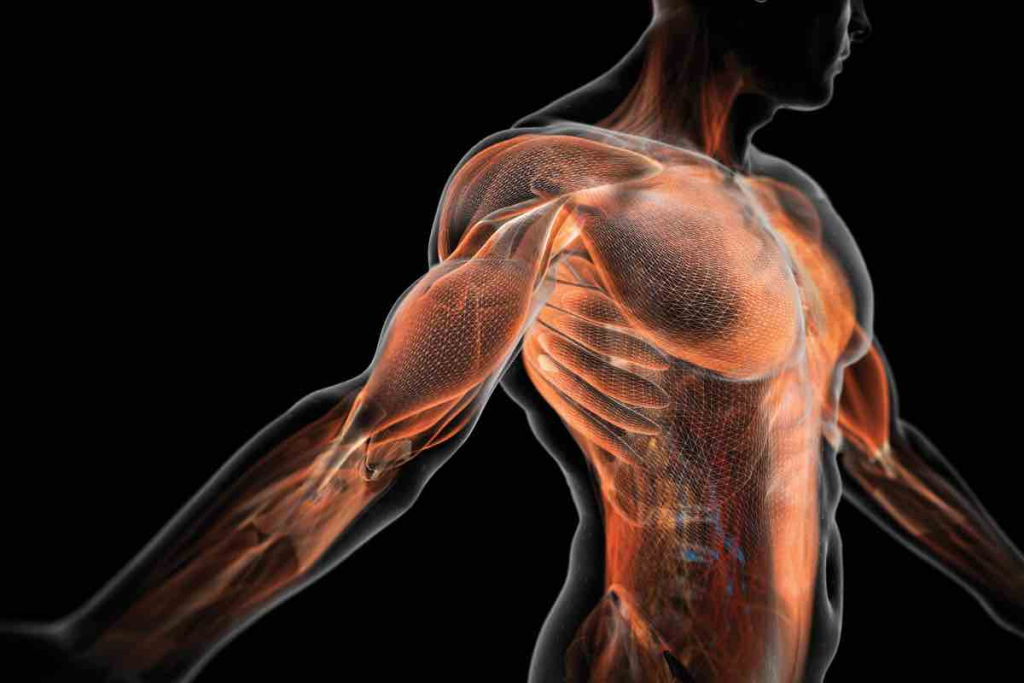
The third mode of intervention in orgone therapy is bio-physical work on the musculature—on the muscular (somatic) armor.
As noted, there is a functional connection between character armor and muscular armor.
A character trait can therefore be eliminated either through character analysis or by releasing the specific emotion held within a particular muscle group.
This is achieved by applying pressure to the involved muscle(s) until further contraction is no longer possible.
If done correctly, the trapped emotion emerges with full intensity and dramatic force. If linked to a traumatic memory, the patient may recall the event—often from childhood—with the same intensity as if reliving it in the present.
This occurs because the emotion, once unexpressed and trapped within character inhibition, has remained alive and can finally be released.
A clarification is necessary here.
The so-called “Reichian massage” is often mentioned, but it is actually a crude distortion of this work.
In orgone therapy, muscles are not “massaged”; rather, the patient is helped to express what the musculature is holding back.
For therapeutic effect, it is essential that:
- patient and therapist are in contact
- the therapist knows exactly the patient’s current state and energy tolerance
- the therapist can withstand the intense emotional impact involved
It is also essential that the practitioner is a physician with deep knowledge of anatomy, physiology, and psychiatry, capable of managing strong psycho-physical reactions.
The choice between working on the psychic or muscular aspect depends on how much the patient is in contact with their emotional inhibitions.
Character analysis identifies contradictions and defenses, while somatic work is indispensable for expressing emotions that the patient feels internally, either spontaneously or as a result of analysis.
Orgone therapy is a powerful method with great therapeutic potential, but due to its depth, it requires the highest level of care and training from those who practice it.
No one would attempt surgery without proper training—and orgone therapy should certainly not be approached with any less seriousness.